Why ten seconds of friction beats willpower
Put a small task between the urge to check a site and the site itself. The pause gives you a moment to decide, and often the urge fades; in a PNAS study of the app one sec, people closed the target app in 36% of attempts after a short pause.
What the video shows
- 1
The urge to check a site is strongest in the first few seconds. Put a small task in that gap, and it often fades on its own.
- 2
Redirect lets you pick the task: type a line, write a reason, breathe, or wait 60 seconds.
- 3
If you still want in after that, it is a real choice.
Read the transcript
Willpower runs out by the afternoon. A little friction does not. The urge to check a site is strongest in the first few seconds. Put a small task in that gap, and it often fades on its own. Redirect lets you pick the task: type a line, write a reason, breathe, or wait 60 seconds. If you still want in after that, it is a real choice. Get Redirect at heyredirect.com.
Related

Close the tab. Open your goals.
Redirect sends distracting sites to the goals you wrote down, and makes every pause a choice.
More videos
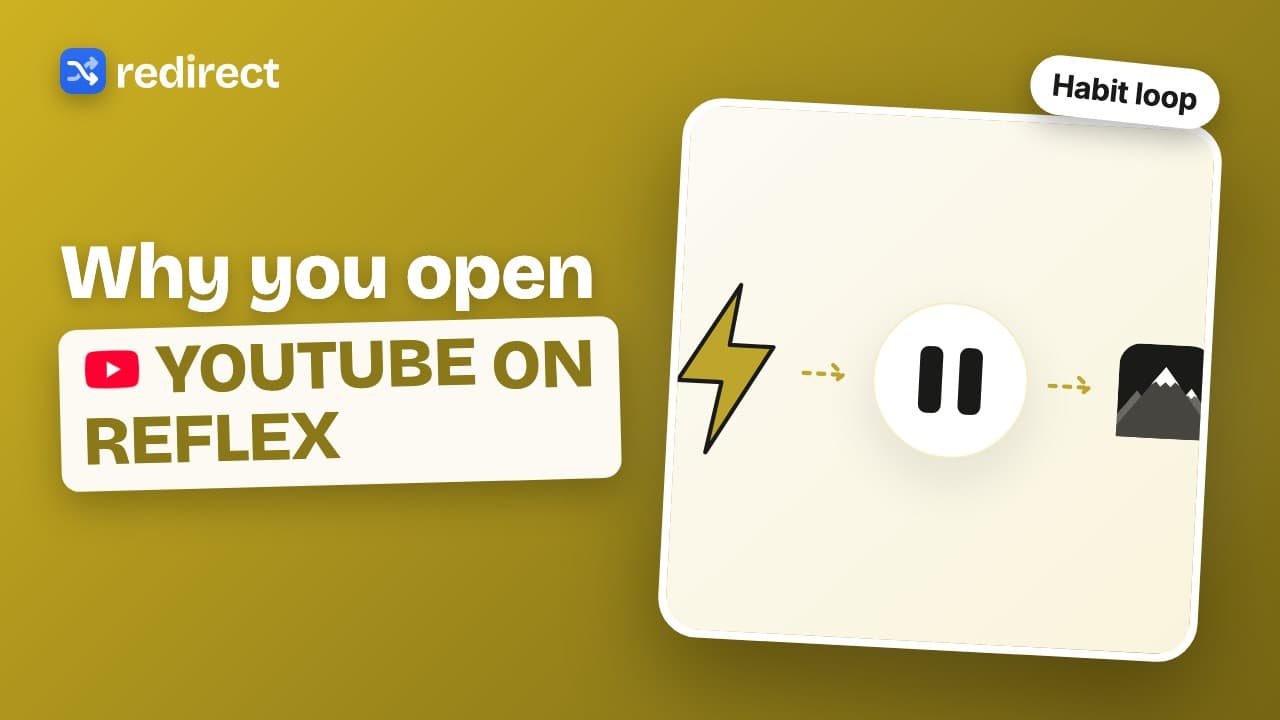 Length 0:28
Why you open YouTube without thinking
A cue triggers a routine and a quick reward keeps the loop going. Change what happens after the cue: same click, but you land on your goals.
Watch the video →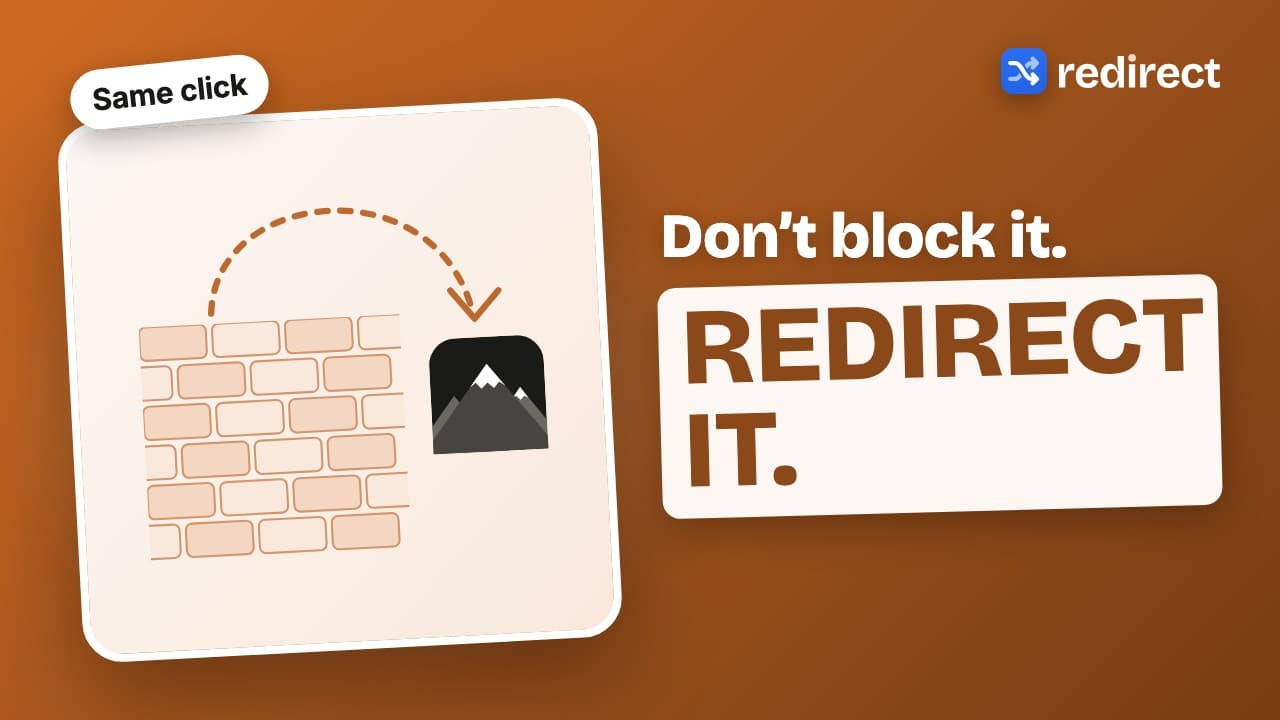 Length 0:27
Do not block distracting sites, redirect them
A blocked page says what you cannot do. A redirect gives you somewhere better to be: the same click now leads to your goals.
Watch the video →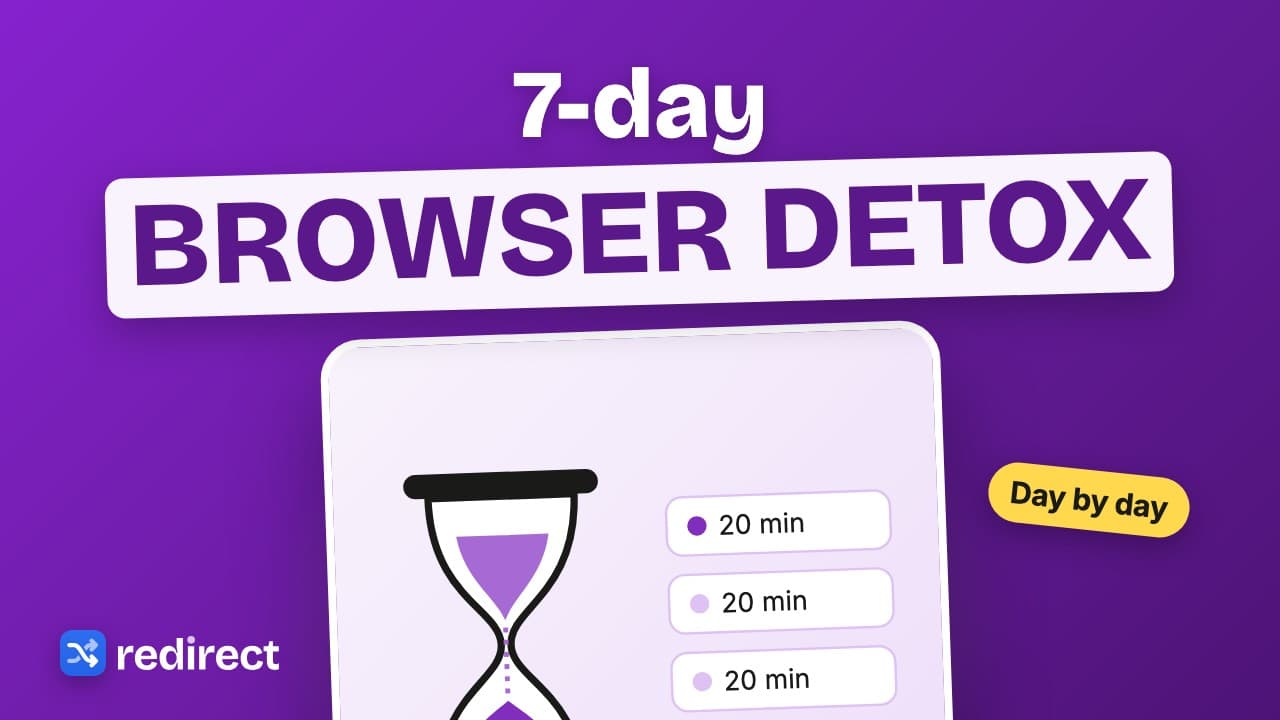 Length 0:28
A 7-day dopamine detox for your browser
One week away from endless feeds: block your top three on day one, add a task before breaks by day three, and look at your redirects on day seven.
Watch the video →